
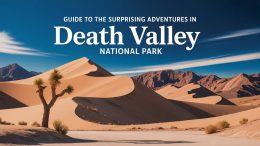
You’ve seen the headlines: “Hottest Place on Earth,” “Driest Place in North America,” “A Land of Extremes.” These monikers paint a picture of a barren, inhospitable wasteland—a place to avoid. But what if we told you that Death Valley National Park is also a place of breathtaking beauty, profound silence, surreal landscapes, and unexpected adventure?
This is not a destination to merely check off a list; it’s an experience that recalibrates your sense of scale and wonder. Forget everything you think you know. This guide will move beyond the thermometer to explore the truly unforgettable things to do in Death Valley National Park, proving it’s not a valley of death, but a valley of life and stunning geological drama.
First Things First: Planning Your Visit with Respect

Before we dive into the attractions, safety and preparation are non-negotiable. The desert here is unforgiving, but with smart planning, it’s perfectly accessible.
- When to Visit: The sweet spot is November to March. Daytime temperatures are pleasant (60s-70s°F), while nights are cold. Summer visits (May-Sept) are strongly discouraged for all but the most experienced desert travelers due to extreme, dangerous heat.
- Fuel and Supplies: Fill your gas tank in Beatty, NV, Lone Pine, or Las Vegas. There are only two stations inside the park (Stovepipe Wells and Furnace Creek), and they are significantly more expensive.
- Hydration: Drink water consistently, not just when you’re thirsty. Plan for one gallon (4 liters) of water per person, per day.
- Navigation: Cell service is virtually non-existent. Download offline maps on Google Maps or, better yet, carry a physical Death Valley National Park map.
- Check Conditions: Always check the official National Park Service website for road closures, weather alerts, and campground statuses before you arrive.
The Iconic Sights: Must-Do Experiences in Death Valley
These are the classics, the places that define the park’s otherworldly character.
-
Witness the Palette at Artist’s Palette
Located along the scenic, one-way Artists Drive, this hillside is nature’s masterpiece. The vibrant hues of gold, green, blue, and purple are caused by the oxidation of various metals in the volcanic deposits. The best time to see the colors pop is in the late afternoon light. It’s a quick, easy stop from the car, but even a short walk brings you closer to the mesmerizing swirls of color.
-
Stand at the Lowest Point in North America: Badwater Basin
At 282 feet (86 m) below sea level, Badwater Basin is a profound experience. Walk out onto the vast, perfectly flat expanse of the salt flats, a sprawling polygon-cracked landscape that stretches to the horizon. Look up at the towering Panamint Mountains and try to spot the small sign high on the cliffside marking “Sea Level” to truly appreciate your depth. Visit at sunrise or sunset for cooler temperatures and spectacular, soft light on the salt crystals.
-
Journey to the Heart of the Desert: Mesquite Flat Sand Dunes
These are the most accessible and famous dunes in the park, located near Stovepipe Wells. Whether you’re a photographer seeking perfect morning shadows, a child (or adult!) who just wants to roll down a sandy hill, or a hiker looking for a workout, the dunes deliver. A walk just a few hundred yards from the parking lot makes you feel utterly isolated in a sea of sand. For an even more remote dune experience, consider the Panamint Sand Dunes on the park’s west side, which require a rugged drive and a significant hike.
-
Walk Through a Marble Canyon: Mosaic Canyon
A short drive from Stovepipe Wells up a rough gravel road leads to this fantastic canyon hike. The smooth, polished marble walls, narrow slots, and mosaic-like fragments of rock cemented together create a cool, intimate escape from the open desert. It’s a relatively easy out-and-back hike where you can turn around at any point, making it perfect for families.
-
Gaze into the Depths from Dante’s View
For the single most breathtaking panoramic view in the park, make the drive up to Dante’s View (over 5,000 feet elevation). From here, you can look down directly onto the white salt flats of Badwater Basin and across the entire valley to the Telescope Peak, which stands over 11,000 feet tall. On a clear day, it’s arguably one of the best viewpoints in the entire National Park System. It’s also a fantastic spot for stargazing.
Beyond the Classics: Hidden Gems and Deeper Adventures
If you have more time, venture off the beaten path to discover Death Valley’s secret personality.
-
Step Back in Time at Harmony Borax Works and the Twenty Mule Teams
Right near Furnace Creek, this short, flat interpretive trail tells the story of the park’s famous mining history. See the ruins of the refining equipment and learn about the infamous Twenty Mule Teams that hauled borax across the desert, a feat of endurance that helped put Death Valley on the map.
-
Explore the Ghost Town of Rhyolite
Just across the border in Nevada (about a 30-minute drive from Furnace Creek), Rhyolite is a well-preserved ghost town born from a short-lived gold rush. Explore the ruins of the bank, the school, and the railroad depot. Don’t miss the bizarre and artistic Goldwell Open Air Museum next door, featuring a ghostly rendition of The Last Supper and a massive pink woman made of cinder blocks.
-
Find Solitude in Side Canyons and Seek Out Wildflowers
Death Valley is crisscrossed with countless unnamed canyons. With a good map, a full tank of gas, and a sense of adventure, simply picking a 4×4 road and exploring can be the most rewarding part of your trip. If you’re visiting in the spring following a wet winter, you might be treated to a superbloom, a rare event where the desert floor explodes in a carpet of wildflowers.
-
Marvel at the Sailing Stones at Racetrack Playa
This is one of Death Valley’s greatest mysteries: rocks that seem to slide across the dry lakebed, leaving long trails behind them. Important Note: The road to the Racetrack (28 miles one-way) is extremely rough, rocky, and requires a high-clearance 4×4 vehicle. A standard sedan will not make it and risks severe damage. The mystery was recently solved (it’s a combination of ice, wind, and wet mud), but seeing the phenomenon in person is still a magical, remote experience.
Read More Also: Affordable Friends’ Camping Adventure
The Night Sky: A Crown Jewel Experience
Due to its immense size, extreme dryness, and lack of light pollution, Death Valley is an International Dark Sky Park. The stargazing is phenomenal. After the sun sets, the universe unveils itself. The Milky Way can be so vivid it casts shadows.
Best Stargazing Spots: Dante’s View, Mesquite Flat Sand Dunes, Badwater Basin, and Harmony Borax Works. Simply pull over safely in any wide pull-out, turn off your lights, and give your eyes 20 minutes to adjust. The celestial show is absolutely free and unforgettable.
Read More Also: Best One Day in Joshua Tree National Park
Conclusion: The Allure of the Extreme
Death Valley National Park defies easy description. It’s a land of beautiful contradictions—harsh yet fragile, empty yet full of life, ancient yet constantly changing. It challenges you, rewards you, and leaves you with a profound sense of awe. It’s not about conquering the heat, but about embracing the scale, the silence, and the surreal landscapes that exist nowhere else on Earth.