
Traveling doesn’t have to drain your wallet before you even leave home. Smart shoppers know that finding quality luggage at affordable prices is entirely possible with the right approach. The luggage market has evolved dramatically, offering travelers numerous options that balance cost with functionality and durability.
Shopping for affordable bags requires more research than simply choosing the cheapest option available. You need to understand what features matter most, which compromises are acceptable, and how to spot genuine value versus false economy. This guide will walk you through everything you need to know about comparing budget-friendly luggage in 2026.
Whether you’re a frequent flyer or an occasional vacationer, investing wisely in luggage protects your belongings and makes travel smoother. The key is knowing what to look for and how to evaluate options systematically. By the end of this article, you’ll have a clear framework for making smart luggage decisions that fit your budget.
Understanding Your Luggage Needs
Before comparing specific bags, take time to assess your actual travel requirements. Different travelers need different features, and understanding your priorities helps you avoid paying for unnecessary additions.
Consider how often you travel and the typical duration of your trips. Frequent business travelers need different bags than families taking annual vacations. Weekend getaways require less capacity than two-week international adventures. Your travel frequency also affects how much durability you need.
Think about the types of destinations you visit most often. Beach vacations, city breaks, and outdoor adventures each present unique packing challenges. Urban travelers might prioritize maneuverability through crowded streets, while adventure seekers need weather-resistant materials.
Airline restrictions play a crucial role in luggage selection. Most carriers have specific size and weight limits for checked and cabin bags. Exceeding these limits results in additional fees that quickly negate any money you saved buying budget luggage. Therefore, always verify that your chosen bag meets airline requirements.
Your packing style matters too. Some people prefer rolling clothes to maximize space, while others use packing cubes or simply fold everything. Certain bag designs work better with specific packing methods. Additionally, consider whether you typically pack light or tend to bring everything but the kitchen sink.
Key Features to Compare Across Brands
When evaluating budget luggage options, certain features directly impact usability and longevity. Understanding these elements helps you make meaningful comparisons between different models and brands.
Wheel quality makes an enormous difference in your travel experience. Cheap wheels can wobble, jam, or break entirely, turning your convenient roller bag into an awkward burden. Look for bags with spinner wheels that rotate 360 degrees, allowing you to push the bag alongside you rather than dragging it behind. Check reviews specifically mentioning wheel durability.
Handle systems receive constant stress during travel. Telescoping handles should extend and retract smoothly without sticking or wobbling. The locking mechanism should hold firmly at various heights to accommodate different users. Top and side handles should have reinforced stitching and comfortable grips for lifting.
Material quality affects both durability and weight. Hard-shell luggage typically uses polycarbonate, ABS plastic, or polypropylene. Polycarbonate offers the best combination of strength and flexibility but costs more. ABS is more affordable but can crack under impact. Soft-sided bags use various fabrics, with ballistic nylon and polyester being common budget-friendly options.
Zipper quality often separates good budget bags from poor ones. YKK zippers are industry standards known for reliability. Heavy-duty zippers with large pulls are less likely to break or separate. Some budget bags use coil zippers instead of tooth zippers, which can be more durable despite looking less robust.
Interior organization features vary widely even among budget options. Look for compression straps that secure contents and prevent shifting during transit. Zippered dividers help separate clean from dirty clothes. Mesh pockets keep small items accessible and organized. However, don’t pay extra for excessive organizational features you won’t use.
Where to Find the Best Deals
Knowing where to shop is just as important as knowing what to buy. Different retailers offer various advantages, and timing your purchase correctly can lead to significant savings on travel gear.
Online marketplaces provide vast selection and competitive pricing. Major retailers often have extensive luggage sections with customer reviews, detailed specifications, and comparison tools. However, you can’t physically inspect the bags before purchasing. Read return policies carefully, as you may need to return items that don’t meet expectations.
Outlet stores and discount retailers specialize in offering brand-name luggage at reduced prices. These bags might be from previous seasons or have minor cosmetic imperfections that don’t affect functionality. The savings can be substantial, but selection is more limited and inconsistent.
End-of-season sales offer excellent opportunities for finding carry-on luggage under $100. Retailers clear inventory before new models arrive, typically in late summer and late winter. Shopping during these periods can yield discounts of 30 to 50 percent or more.
Black Friday and Cyber Monday have become major shopping events for luggage. Many brands offer their deepest discounts during this period. However, be wary of artificially inflated original prices designed to make discounts seem larger than they are. Research normal prices beforehand.
Flash sale websites occasionally feature luggage deals with limited quantities at very low prices. These sales require quick decisions and don’t allow much time for comparison shopping. Sign up for notifications from these sites but don’t feel pressured to buy without adequate research.
Warehouse clubs offer surprisingly good luggage values for members. The selection is limited, but prices on quality brands can be excellent. Additionally, generous return policies make these retailers low-risk options for trying budget luggage.
Reading Reviews Effectively
Customer reviews provide invaluable insights into real-world luggage performance. However, learning to read reviews critically ensures you get accurate information rather than misleading impressions.
Focus on reviews from verified purchasers who have actually used the luggage for travel. Initial impressions after unboxing don’t reveal durability or functionality issues that emerge during actual use. Look for reviews written after multiple trips spanning several months.
Pay attention to recurring complaints across multiple reviews. One person mentioning a broken wheel might be unlucky, but dozens of people reporting the same issue indicates a design flaw. Similarly, widespread praise for specific features suggests genuine quality.
Consider the reviewer’s travel style and needs. A review from someone taking short business trips might not be relevant if you’re planning extended family vacations. Look for reviewers whose usage patterns match yours for the most applicable insights.
Beware of extremely positive or negative reviews that lack specific details. Generic praise or complaints without examples might be fake reviews. Authentic reviews typically include specific scenarios, measurements, or comparisons to other products.
Check review dates to ensure you’re reading current information. Manufacturers sometimes change materials or designs while keeping the same model name. Reviews from several years ago might not accurately reflect current quality.
Comparing Hard-Shell Versus Soft-Sided Options
The choice between hard-shell and soft-sided luggage involves tradeoffs that affect price, durability, and functionality. Understanding these differences helps you choose the right type for your needs.
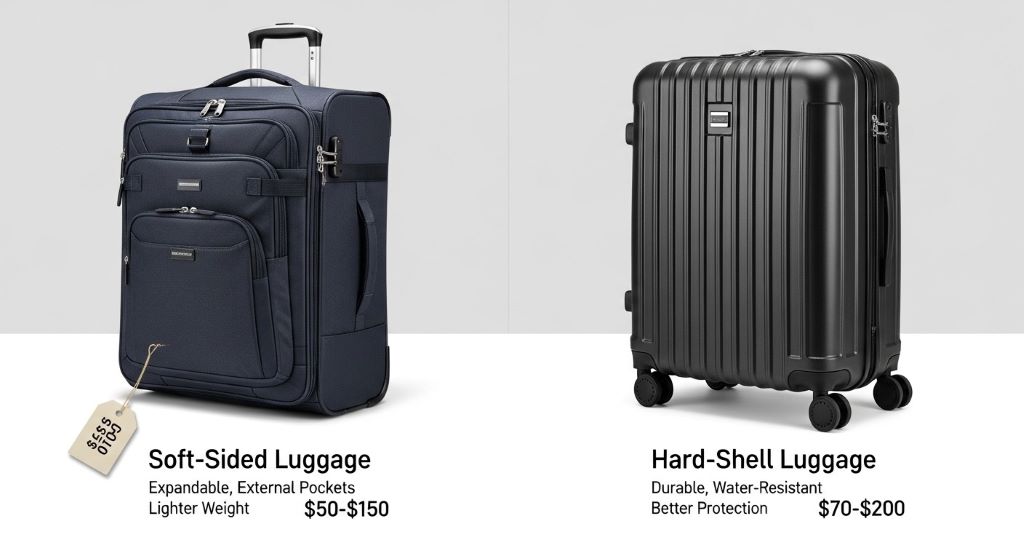
Hard-shell luggage provides superior protection for fragile items. The rigid exterior prevents crushing, making these bags ideal if you pack electronics, glass bottles, or other breakable items. They’re also easier to clean and more water-resistant than fabric bags.
However, hard-shell options generally cost more at the budget end of the market. They also lack external pockets for easy access to items you might need during transit. The fixed shape means you can’t squeeze them into tight overhead compartments or car trunks as easily as soft bags.
Soft-sided luggage typically offers more flexibility and external storage. You can compress these bags slightly to fit into tight spaces. External pockets provide convenient access to documents, snacks, or toiletries. They also tend to weigh less than hard-shell equivalents.
The downside is less protection for contents and greater vulnerability to weather. Soft bags can also develop tears or stains more easily than hard-shell options. Additionally, they may not stand upright as reliably when partially packed.
For budget-conscious travelers, soft-sided bags often provide better value. You can find quality options with good features at lower prices than comparable hard-shell bags. Nevertheless, if you regularly pack fragile items, investing a bit more in a hard-shell option makes sense.
Evaluating Warranty and Customer Service
Warranty coverage and customer service quality significantly impact the true value of budget luggage. A bag that breaks after two trips and can’t be repaired or replaced costs more in the long run than a slightly pricier option with good support.
Check warranty length and what it covers. Some manufacturers offer lifetime warranties on certain components like wheels or handles. Others provide coverage for one to five years. Read the fine print to understand what types of damage are covered versus what’s excluded.
Understand the warranty claim process before purchasing. Some companies make returns and repairs easy through local retailers or prepaid shipping labels. Others require you to pay return shipping and navigate complicated claim forms. Research customer experiences with warranty claims for brands you’re considering.
Customer service responsiveness matters when issues arise. Look for companies with readily available phone support, email support, or live chat. Check review sites to see how quickly and effectively they resolve problems.
Some budget brands offer surprisingly good support despite lower prices. These companies build customer loyalty through excellent service, which can be worth more than fancy features. Conversely, some well-known brands have frustrating customer service that diminishes the value of their products.
Consider whether the retailer offers additional protection plans. While these plans cost extra, they might be worth it for budget luggage that doesn’t include comprehensive manufacturer warranties. Calculate whether the plan cost plus the bag price still represents good value.
Testing Before Committing
If possible, physically examining luggage before purchasing provides information you can’t get from online descriptions or reviews. Even when buying online, knowing what to test when the bag arrives helps you decide whether to keep it.
Check the weight of the empty bag. Budget luggage sometimes compensates for cheaper materials by using more of them, resulting in heavier bags. Lifting an empty bag gives you a sense of how much it will weigh packed. Remember that airline weight limits include the bag itself.
Test all moving parts repeatedly. Extend and retract the telescoping handle multiple times at different heights. Roll the bag around your home or down a hallway. Open and close every zipper, checking for smooth operation and proper alignment.
Inspect construction quality closely. Look at seam stitching for loose threads or gaps. Check that handles are securely attached with reinforced stitching. Examine corners and stress points for weak materials or construction. These areas fail first on poorly made bags.
Verify the dimensions against airline requirements. Manufacturers sometimes list external dimensions that don’t account for wheels and handles. Measure the bag yourself to ensure it qualifies as a carry-on if that’s what you need.
Pack the bag with items similar to what you’d travel with. This test reveals whether the interior space works for your packing style and whether the organization features are actually useful. It also shows whether zippers close easily when the bag is full.
Understanding True Cost of Ownership
The purchase price tells only part of the story. Calculating the total cost of ownership over time helps you understand whether apparent travel gear savings are genuine or illusory.
Factor in potential replacement costs. A bag that costs half as much but lasts one-third as long actually costs more per year of use. Estimate how many trips you’ll take and how long you need the luggage to last. Divide the purchase price by expected years of use for a more accurate cost comparison.
Consider repair possibilities and costs. Some budget bags aren’t designed to be repaired, meaning any damage requires complete replacement. Others use standard components that can be replaced affordably. Bags with replaceable wheels or zippers can last much longer than those without these options.
Account for airline fees related to baggage. If a slightly more expensive bag meets carry-on requirements while a cheaper one doesn’t, you’ll save money by avoiding checked bag fees. Similarly, lighter bags leave more room in weight allowances for your belongings.
Think about opportunity costs. Dealing with broken luggage during a trip wastes valuable vacation time and creates stress. The cheapest bag that ruins a trip costs far more than a moderate investment in reliable luggage that performs well.
Calculate the value of features you’ll actually use. Paying more for features you need is worthwhile, but extra features you’ll never use waste money. Be honest about which features enhance your travel experience versus which are merely nice to have.
Common Mistakes to Avoid
Learning from others’ mistakes helps you make better decisions and avoid wasting money on unsuitable luggage. Several common errors trip up budget-conscious travelers.
Buying solely based on appearance is a frequent mistake. A stylish bag that falls apart after two trips is no bargain. While aesthetics matter, prioritize functionality and durability over looks when comparing budget options.
Ignoring size restrictions leads to unexpected costs. Many travelers buy bags without checking specific airline requirements, only to discover they must pay checked baggage fees. Always verify dimensions and weight limits for your typical carriers before purchasing.
Assuming all budget bags are equally low quality prevents you from finding genuine value. Some affordable brands offer excellent quality, while others cut corners on critical components. Research specific models rather than dismissing entire price ranges.
Overlooking return policies creates problems if the luggage doesn’t meet expectations. Always purchase from retailers with generous return windows, especially when buying online. This protection is essential for budget purchases where quality can be unpredictable.
Buying too much luggage at once seems economical but can backfire. Start with one bag to test a brand or style before investing in a complete set. If that first bag disappoints, you haven’t wasted money on multiple pieces.
Neglecting to compare prices across retailers costs money unnecessarily. The same bag can vary in price by 20 percent or more between different stores. Spend a few minutes checking multiple retailers before making your purchase.
Sustainable and Ethical Considerations
Budget shopping doesn’t mean abandoning values around sustainability and ethical production. Several strategies help you find affordable luggage that aligns with your principles.
Research brand labor practices and manufacturing conditions. Some budget brands achieve low prices through ethical efficiency, while others exploit workers. Look for companies transparent about their supply chains and manufacturing processes.
Consider environmental impact of materials and production. Recycled materials and sustainable manufacturing processes sometimes cost more but represent better long-term value. Additionally, durable luggage that lasts many years has less environmental impact than cheap bags requiring frequent replacement.
Buy secondhand luggage when appropriate. Many people sell barely used bags after discovering they don’t meet their needs. Online marketplaces and consignment stores offer opportunities to find quality luggage at significant discounts while reducing waste.
Support companies with repair programs and replacement part availability. Brands committed to longevity often sell replacement wheels, handles, and other components. This commitment extends product life and demonstrates environmental responsibility.
Look for certifications indicating responsible production. Labels like Fair Trade, Bluesign, or similar certifications indicate companies meeting certain ethical and environmental standards. While certified products may cost slightly more, they often represent better overall value.
Making Your Final Decision
After researching options and comparing features, you’re ready to make an informed purchase decision. A systematic final evaluation ensures you choose luggage that truly meets your needs and budget.
Create a shortlist of three to five options that meet your requirements. List each bag’s price, key features, warranty terms, and standout pros or cons. This visual comparison makes differences clear and helps you weigh tradeoffs objectively.
Revisit your priorities from the beginning of your search. Which features matter most for your specific travel needs? Which ones can you compromise on? Ensure your final choice aligns with your actual usage patterns rather than theoretical preferences.
Calculate total cost including any accessories you’ll need. If a bag requires separate luggage tags, locks, or packing organizers, factor those costs into your comparison. Sometimes a slightly more expensive option includes features that save money elsewhere.
Check current prices one final time before purchasing. Prices fluctuate, and waiting a day or two might yield a better deal. Set up price alerts if you’re not in a hurry to buy.
Read the most recent reviews one last time. New reviews might reveal issues or improvements not reflected in older feedback. This final check provides confidence in your decision.
Conclusion
Comparing budget luggage in 2026 requires more than simply choosing the lowest price. Smart travelers evaluate features, read reviews critically, and understand the true cost of ownership. Finding carry-on luggage under $100 that meets airline requirements and lasts multiple trips is entirely achievable with proper research.
Focus on essential features like wheel quality, handle durability, and material construction. Read customer reviews from verified purchasers who have used bags for actual travel. Compare prices across multiple retailers and time your purchase to coincide with sales events for maximum travel gear savings.
Remember that the cheapest option rarely represents the best value. A moderately priced bag that lasts five years costs less per trip than a dirt-cheap option requiring replacement every year. Consider warranties, customer service, and repair possibilities when making your final decision.
Taking time to compare options systematically before purchasing protects your investment and enhances your travel experience. The right budget luggage balances affordability with functionality, serving you well for many adventures to come. Armed with the knowledge from this guide, you’re ready to find luggage that fits both your needs and your budget perfectly.
Frequently Asked Questions
Is it worth buying cheap luggage or should I save for expensive brands?
The answer depends on your travel frequency and needs. If you travel occasionally, quality budget luggage can serve you well for years. However, frequent travelers should invest more in durability and features. The key is finding bags with good reviews in your price range rather than assuming all cheap luggage is poor quality. Many mid-range options offer excellent value, balancing cost with reliability better than either extreme.
How can I tell if budget luggage will last?
Check customer reviews specifically mentioning durability after multiple trips. Look for quality indicators like YKK zippers, reinforced corners, and strong stitching. Examine the warranty coverage, as companies confident in their products offer better guarantees. Feel the weight and construction of materials if possible. Additionally, research whether replacement parts are available, which indicates a bag designed for longevity rather than planned obsolescence.
What size luggage qualifies as carry-on for most airlines in 2026?
While specific limits vary by carrier, most airlines accept bags up to 22 x 14 x 9 inches including wheels and handles. However, budget carriers often have stricter requirements, and international flights may differ from domestic standards. Always check your specific airline’s current requirements before purchasing. Some bags marketed as carry-on actually exceed limits for certain carriers, so verify dimensions independently rather than relying solely on product descriptions.
Are soft-sided or hard-shell bags better for budget travelers?
Soft-sided bags typically offer better value in the budget category. They cost less, weigh less, and provide more flexibility in tight spaces. Hard-shell bags provide superior protection for fragile items but generally cost more at comparable quality levels. Choose based on what you typically pack and your protection needs. If you rarely pack breakables and value exterior pockets, soft-sided bags are more economical. For electronics and fragile souvenirs, consider investing in a hard-shell option.
When is the best time to buy luggage to get maximum savings?
The best deals typically appear during end-of-season sales in late summer and late winter, Black Friday weekend, and Cyber Monday. Additionally, watch for deals around New Year’s when people plan upcoming travel. Prime Day and other retailer-specific sales events sometimes feature luggage discounts. Sign up for email notifications from luggage retailers to catch flash sales. However, if you need luggage immediately for a trip, don’t wait for sales as the risk of traveling with inadequate bags isn’t worth potential savings.
Related Topics:
Beyond the Heat: Your Ultimate Guide to the Surprising Adventures in Death Valley National Park
Road Trip Essentials for Your Memorial Day Getaway