Key Takeaways
- 38% of experienced travelers say overpacking is their biggest travel mistake.
- U.S. airlines collected more than $7.4 billion in baggage fees in 2025.
- Many travelers pack items like evening wear or gadgets that go unused.
- Packing needs vary significantly based on trip type and destination.
- Simple planning helps travelers avoid unnecessary fees and heavy luggage.
Packing for a trip often feels harder than planning the trip itself. As the gear testing experts at BeReviewers frequently warn, many travelers bring far more than they actually need, leading to unnecessary stress, excess baggage fees, and ruined itineraries. However, packing smart for your specific trip type makes travel much easier. In this article, we will explore what to pack for different types of travel. We will also share useful research, practical tips, and answers to common questions.
Why Smart Packing Matters More Than Ever
Overpacking remains one of the most common travel mistakes, even among experienced travelers. Understanding why this happens helps explain why smart packing deserves more attention. This awareness can save both money and unnecessary stress.
Recent survey data confirms just how persistent this problem is. 38% of experienced international travelers identify overpacking as their biggest travel mistake. This figure has actually increased in recent years, showing the problem remains widespread.
Financial consequences make this issue even more significant. U.S. airlines collected more than $7.4 billion in baggage fees in 2025 alone. This represents a massive increase over just five years. Therefore, packing smart increasingly protects your travel budget as much as your convenience.
Unused items also contribute significantly to overpacking. Many travelers pack a “just-in-case” jacket that never gets worn during their trip. Additionally, many bring extra shoes or evening wear for events that never actually happen. This shows how much unnecessary weight often comes from planning for unlikely scenarios.
Understanding these patterns helps travelers pack more intentionally. Matching your packing list to your actual trip type reduces both weight and stress. Therefore, thoughtful planning benefits nearly every type of travel experience.
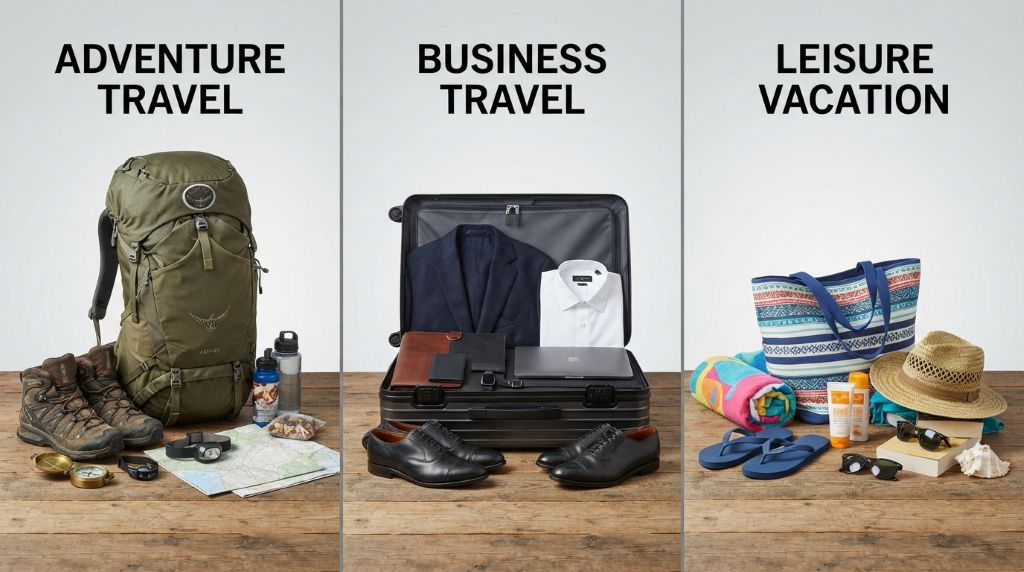
Packing for Business Travel
Business travel requires efficient, professional packing suited to short, focused trips. Unlike leisure travel, business trips often involve tight schedules and limited downtime. Therefore, packing should prioritize functionality and quick access over variety.
Clothing choices should focus on versatility for business trips. Pack items that can be mixed and matched across multiple days easily. Additionally, wrinkle-resistant fabrics help maintain a professional appearance without requiring ironing.
Efficient packing also supports faster movement through airports and meetings. A lighter bag makes every part of travel easier, from navigating airports to changing plans quickly. This flexibility matters significantly for business travelers juggling tight schedules.
Essential business travel items typically include:
- A few versatile, wrinkle-resistant outfits for meetings.
- Comfortable shoes suitable for walking and standing.
- A laptop, charger, and necessary work documents.
- A small toiletry bag with travel-sized essentials.
Avoiding unnecessary extras matters just as much as packing essentials. Skip items like formal evening wear unless your itinerary specifically requires it. Therefore, focused, minimal packing supports smoother, more efficient business travel overall.
Packing for Leisure and Vacation Travel
Leisure travel often tempts travelers to pack for every possible scenario. However, research shows this instinct frequently backfires. Therefore, focusing on your actual planned activities leads to smarter, lighter packing.
Overpacking remains especially common during leisure trips. Studies show many travelers pack significantly more clothing items than they actually need for a week-long trip. Additionally, many bring workout clothes or equipment that never actually gets used during the trip.
Planning around your confirmed itinerary helps avoid this pattern. Instead of packing “just in case,” consider which activities are actually scheduled. For example, only pack workout gear if you have concrete plans to exercise during your trip.
Essential leisure travel items typically include:
- Weather-appropriate clothing based on your destination’s forecast.
- One versatile outfit for unplanned dinners or outings.
- Basic toiletries and any necessary medications.
- A portable charger for photos and navigation apps.
Packing based on your actual itinerary, rather than hypothetical scenarios, significantly reduces excess luggage. This approach keeps your leisure travel lighter and more manageable throughout your trip.
Packing for Beach and Warm-Weather Trips
Beach and warm-weather trips require specific, climate-focused packing choices. However, these trips also commonly lead to overpacking mistakes. Therefore, understanding which items truly matter helps avoid unnecessary weight.
Certain items frequently go unused during beach vacations. Some travelers pack inflatable pool toys that never even make it into the water. Additionally, many bring multiple swimsuits or cover-ups beyond what they realistically need.
Climate-appropriate essentials should form the core of your beach packing list. Lightweight, breathable fabrics work best for hot, humid destinations. Additionally, sun protection items deserve priority placement in your luggage.
Essential beach and warm-weather travel items typically include:
- Two to three swimsuits and lightweight cover-ups.
- Reef-safe sunscreen and after-sun care products.
- A reusable water bottle for staying hydrated.
- Comfortable sandals and one pair of walking shoes.
Focusing on climate-specific essentials, rather than optional extras, keeps beach packing manageable. This targeted approach helps you avoid excess baggage fees while still preparing appropriately for warm weather.
Packing for Cold-Weather and Adventure Travel
Cold-weather and adventure trips often require bulkier, specialized gear. However, this does not mean packing should become excessive or disorganized. Therefore, strategic layering and gear selection remain essential for these trip types.
Layering represents the most effective strategy for cold-weather packing. Multiple thinner layers provide more flexibility than one bulky item. Additionally, this approach allows travelers to adjust easily as temperatures change throughout the day.
Fabric choice significantly affects both comfort and packing efficiency. Odor-resistant, quick-drying fabrics allow travelers to re-wear clothing longer with fewer total pieces. This reduces overall luggage weight while maintaining comfort during extended trips.
Essential cold-weather and adventure travel items typically include:
- A waterproof outer layer and insulated mid-layer jacket.
- Moisture-wicking base layers for temperature regulation.
- Sturdy, broken-in footwear appropriate for your planned activities.
- Any specialized gear required for specific adventure activities.
Choosing versatile, functional layers over excessive bulk keeps adventure travel both practical and manageable.
Avoiding Common Packing Mistakes
Certain packing mistakes appear repeatedly across nearly every type of travel. Recognizing these patterns helps travelers avoid unnecessary weight and cost. Therefore, reviewing common pitfalls before packing can significantly improve your travel experience.
Gadgets and electronics frequently go unused during trips. Some travelers pack items like hairdryers or travel irons that remain unused throughout their entire trip. Checking your accommodation’s amenities beforehand can help avoid this unnecessary weight.
Overpacking also creates practical problems beyond extra fees. Many travelers report difficulty closing suitcases due to excess items. Additionally, a significant share end up exceeding airline weight limits entirely, leading to costly last-minute fees.
Solo travelers appear particularly prone to overpacking. Research shows solo travelers are more likely to knowingly overpack compared to those traveling with family. This suggests that packing decisions often benefit from an outside perspective or checklist.
Here are quick tips for avoiding common packing mistakes:
- Check your accommodation for available amenities before packing gadgets.
- Use a packing checklist tailored to your specific trip type.
- Weigh your luggage before heading to the airport.
- Avoid packing for hypothetical events not on your itinerary.
Avoiding these common mistakes helps keep your luggage lighter and your travel budget intact.
Building a Trip-Specific Packing Checklist
Creating a checklist tailored to your specific trip type prevents most common packing mistakes. Generic packing lists often lead to unnecessary items and forgotten essentials. Therefore, customizing your checklist based on trip type improves overall packing efficiency.
Start by reviewing your confirmed itinerary before packing anything. This helps identify which items are genuinely necessary for planned activities. Additionally, checking weather forecasts for your destination further refines your packing choices.
Separating essentials from optional items also improves packing decisions. Core items, like weather-appropriate clothing and necessary documents, should always come first. Optional items should only make the list if they clearly relate to confirmed plans.
Here is a simple approach to building your packing checklist:
- Review your confirmed itinerary and planned activities.
- Check weather forecasts for your specific destination.
- List climate-appropriate clothing based on trip length.
- Add trip-specific gear only for confirmed activities.
- Review your list once more before finalizing your bag.
This structured approach helps ensure your packing matches your actual trip needs, not hypothetical scenarios.
Conclusion
Packing smart for different types of travel requires matching your choices to your actual trip needs. Business, leisure, beach, and adventure travel each call for different priorities and essentials. If you are planning how to prepare for long-term travel adventures, choosing versatile items and planning for different situations can help you stay organized without overpacking. Avoiding common mistakes, like packing for hypothetical scenarios, helps prevent excess weight and fees. A trip-specific checklist keeps your packing focused and manageable every time.
As baggage fees continue rising, smart packing matters more than ever. Before your next trip, take time to build a checklist suited to your specific plans. Thoughtful packing leads to lighter luggage and a smoother, more enjoyable travel experience.
Frequently Asked Questions
What is the most commonly overpacked item category?
Clothing, especially “just-in-case” items like extra jackets, shoes, and unworn evening wear.
How can I avoid paying excess baggage fees?
Weigh your luggage before departure and pack only items matching your confirmed itinerary.
Do solo travelers really overpack more than others?
Yes, research shows solo travelers are more likely to knowingly overpack than those traveling with others.
Is layering really more effective than bulky winter clothing?
Yes, multiple thin layers offer more flexibility and often weigh less than bulky items.
Should I pack gadgets like hairdryers for hotel stays?
Usually not. Most hotels provide these amenities, making extra gadgets unnecessary weight.